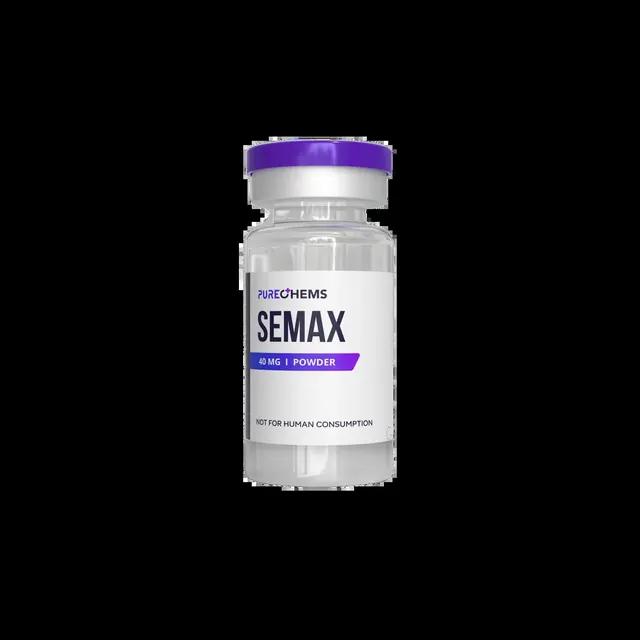
Semax vs Selank: What the Research Shows
A research use only comparison of Semax and Selank, two heptapeptides studied in preclinical neuroscience: chemistry, mechanisms, handling and FAQs.
Read article
Research Use Only. All materials discussed here are intended strictly for in vitro laboratory research and analytical work. They are not for human or veterinary use, and nothing below should be read as guidance on use in people or animals.
A certificate of analysis, usually shortened to COA, is the document that tells a laboratory what is actually inside a vial. For anyone working with research peptides and small molecule research chemicals, it is the single most informative piece of paperwork attached to a material. Yet the COA is also one of the most misread documents in the field. A number printed as "99% purity" carries very different weight depending on which method produced it, how the method was run, and what the remaining 1% happens to be.
This guide walks through what appears on a peptide COA, what the analytical methods behind those numbers actually measure, and how researchers evaluate whether a document supports the identity and quality claims being made. It is a laboratory practice article rather than a compound profile, so it applies across the catalogue rather than to any single material.
A COA is a summary report issued for a specific production batch of a material. It records the tests that were performed on that batch, the results obtained, and the specification each result was compared against. Because it is batch specific, a COA is only meaningful when the batch or lot number on the document matches the batch number on the vial in hand. A generic COA that carries no lot number, or one whose lot number does not correspond to the physical material, provides no traceability and should be treated as an unverified marketing document rather than analytical evidence.
A reasonably complete COA for a synthetic peptide typically records the following fields.
This distinction causes more confusion than any other item on a COA, and it is worth stating plainly. Chromatographic purity describes what fraction of the detected peptide related material is the target peptide. Peptide content describes what fraction of the total dry mass in the vial is peptide at all.
A lyophilised synthetic peptide is rarely pure peptide by mass. The powder also contains water absorbed during handling, residual salts, and counter ions from the purification step. Trifluoroacetic acid is the standard mobile phase additive in preparative reversed phase purification, and it remains associated with basic residues in the finished powder. Depending on the sequence and the number of basic residues, the combination of water, salt, and counter ion can account for a substantial share of the total mass. A material can therefore be entirely accurate in reporting 98% chromatographic purity while the peptide itself represents a considerably smaller proportion of what the balance weighs. Both numbers are legitimate; they simply answer different questions, and a COA that reports only the first is telling an incomplete story.
The techniques listed on a routine COA are the same ones used in published peptide characterisation work, and the peer reviewed literature is a useful reference point for understanding both their power and their limits.
A frequently cited illustration of thorough characterisation is the analytical study of biphalin published by Hettiarachchi and colleagues in the Journal of Peptide Research. The authors set out to characterise a structurally modified opioid octapeptide and found that standard techniques on their own were not adequate. Amino acid sequence analysis confirmed only the monomer sequence rather than the full palindromic structure, so electrospray ionisation mass spectrometry, including tandem mass spectrometry, was required to confirm the complete sequence. Purity was determined by two orthogonal techniques, reversed phase HPLC and capillary electrophoresis, and the trifluoroacetic acid counter ion was quantified separately by capillary electrophoresis with indirect detection. The paper is a clear demonstration of a principle that applies to routine QC as well: a single method rarely establishes both identity and purity on its own.
The value of orthogonal methods is reinforced by work from analysts at the United States Food and Drug Administration. Shu and colleagues, publishing in the Journal of Pharmaceutical and Biomedical Analysis, validated a quantitative nuclear magnetic resonance procedure for assessing glutathione drug substance and its four related impurities. Two sample preparations at different pH values were needed to resolve all four impurities unambiguously, with impurities A and C characterised at pH 3.0 and impurities B and D at pH 7.4. The validated method reached a limit of detection below 0.1% by weight per individual impurity, and the authors applied it to commercial bulk material, a compounded preparation, and a dietary supplement product, as well as to monitoring hydrolysis and oxidation over time. Their framing of qNMR as an orthogonal tool alongside compendial chromatographic procedures is the practical lesson for anyone reading a COA.
How difficult impurity identification can become is illustrated by Liu and colleagues in the Journal of Chromatography A, working on capreomycin sulfate. The authors noted that despite literature evidence that impurity content influences the toxicity profile of the product, no single impurity in capreomycin had previously been isolated and definitively identified, because the compound is strongly basic and highly polar. Resolving the four major impurities required an improved ion pair method for detection, two dimensional liquid chromatography coupled to quadrupole time of flight mass spectrometry for high resolution analysis, a hydrophilic interaction chromatography method for preparative isolation, and controlled acid and base degradation to generate clean individual impurities for structural assignment by MS and NMR. The takeaway is that a single area percentage figure on a COA compresses a genuinely complex analytical picture into one number.
Research peptides and research chemicals supplied in the European Union are chemical reagents supplied under REACH, not medicinal products. They have not been evaluated or authorised by the European Medicines Agency or any national competent authority for use in humans or animals, and they are not manufactured to the pharmaceutical GMP standards that would apply to a medicine.
This has a direct bearing on how a COA should be read. A COA documents the analytical properties of a batch of reagent. It is not a marketing authorisation, it is not evidence of safety, and it says nothing whatsoever about suitability for administration to a living subject. A material can carry an entirely accurate COA showing high chromatographic purity and correct mass, and remain strictly a laboratory reagent. Purity and safety are separate concepts, and conflating them is the most common error made when interpreting these documents.
It is also worth noting that several classes of compound sold as research chemicals are prohibited in sport by the World Anti-Doping Agency, and some carry documented preclinical safety signals. A certificate of analysis for such a material confirms what the vial contains; it does not alter the regulatory or safety status of the compound itself.
These are general laboratory handling notes for research materials. They describe the treatment of a reagent in a laboratory setting and are not instructions for use in any living subject.
Analytical grade research materials, including glutathione research solution, are supplied by Pure Chems strictly for laboratory research use. Background on that particular compound is available in the glutathione research overview.
It normally means that in the HPLC chromatogram, the peak corresponding to the target peptide accounted for 99% of the total integrated peak area at the stated detection wavelength. It is a relative measure of peptide related species detected by that method. It does not mean that 99% of the mass in the vial is peptide, because water, salts, and counter ions are not detected by that method at all.
HPLC purity is the proportion of detected peptide related material that is the target sequence. Peptide content is the proportion of total dry weight that is peptide, with water, salt, and counter ion making up the remainder. The two figures are determined by different methods and answer different questions. A thorough COA reports both.
No. A certificate of analysis is a batch level analytical document and has no regulatory standing as an approval of any kind. Compounds supplied as research chemicals have not been assessed or authorised by the European Medicines Agency or national regulators for human or veterinary use. Marketing authorisation follows a separate and far more extensive process involving clinical evidence, and a COA forms no part of it.
Within the European Union, research peptides and research chemicals are generally supplied as laboratory reagents under the REACH framework, provided they are sold and used strictly for in vitro research and are not presented for human or veterinary use. National rules vary, some individual substances carry additional restrictions, and the legal position depends on the specific compound and the member state. Institutions and individual researchers are responsible for verifying the applicable national requirements before ordering.
A COA without a lot number cannot be tied to the material in front of you and provides no traceability. A COA that shows only a summary table without the underlying chromatogram and mass spectrum prevents any independent assessment of peak shape, baseline, or integration. Neither is necessarily evidence of a problem, but both reduce the document to an assertion rather than verifiable analytical evidence.
References sourced via PubMed.
Research Use Only. The information above summarises analytical and laboratory practice literature for informational purposes. All products referenced are supplied strictly as chemical reagents for in vitro laboratory research. They are not medicinal products, are not authorised by the EMA or any national competent authority, and are not for human or veterinary use, consumption, or administration. Nothing here is medical advice or a health claim.
A research use only comparison of Semax and Selank, two heptapeptides studied in preclinical neuroscience: chemistry, mechanisms, handling and FAQs.
Read article
A research-use-only overview of exercise mimetics: PPAR-delta, REV-ERB and ERR research compounds studied in preclinical metabolic literature.
Read article
A research use only overview of tissue repair and recovery peptides (BPC-157, TB-500, GHK-Cu and more) with preclinical context and lab handling notes.
Read article