Mitochondrial-Derived Peptides: MOTS-c, Humanin and SS-31 Research Overview
An overview of mitochondrial-derived peptides MOTS-c and humanin plus mitochondria-targeted SS-31, covering preclinical literature. Research use only.
Read article
Research Use Only. Every compound described on this page is supplied strictly as a laboratory reagent for in vitro and preclinical research. Not for human or veterinary use. Not a medicine, food, supplement or cosmetic, and not intended for diagnostic or therapeutic purposes.
Several of the peptides that appear most often in laboratory catalogues share a common thread: they were first isolated from, or modelled on, molecules that the body itself uses to regulate immune signalling. Thymic peptides came out of decades of work on the thymus gland. Melanocortin fragments came out of work on how alpha-MSH quiets inflammatory pathways. Host defence peptides such as LL-37 came out of innate immunity research. Grouping them together makes sense for anyone building a literature map, because they are studied with overlapping assays and overlapping questions.
This overview sits at the top of that cluster. It summarises what the published preclinical literature reports about each group, how they differ chemically, and what laboratories should know about handling them. It is descriptive only. Nothing here is a claim about what these compounds do in people, and nothing here is guidance on use.
The label covers three loosely related families that are frequently studied side by side.
Thymic peptides are sequences originally identified in thymus tissue or in thymic extracts. The thymus is where T lymphocytes mature, and researchers spent much of the 1970s and 1980s fractionating thymic extracts to find the signalling molecules responsible. Thymosin Alpha 1 and Thymulin both came out of that effort.
Melanocortin-derived fragments are short sequences taken from alpha-melanocyte-stimulating hormone. The best known is the C-terminal tripeptide KPV, which retains part of the parent molecule's reported activity in cell and animal models while being far simpler to synthesise.
Innate immunity and cytokine-receptor peptides is a broader bucket. LL-37 is the only human cathelicidin-derived host defence peptide and is a standard reagent in antimicrobial and wound-biology assays. ARA-290 is a synthetic peptide modelled on a region of erythropoietin, designed in the laboratory to interact with the innate repair receptor rather than the classic erythropoietin receptor.
The literature here is unusually deep for research peptides, partly because thymic biology and melanocortin signalling were both mainstream academic fields long before these sequences appeared in reagent catalogues. According to PubMed, work on Thymosin Alpha 1 alone spans several decades and has been summarised in comprehensive review articles.
What follows describes what investigators have reported in published experimental systems. It is written in the third person about the literature, not about any product.
A 28 amino acid acetylated peptide derived from prothymosin alpha. It is the most extensively documented member of the group. A 2020 review in the World Journal of Virology surveys the background literature and the various contexts in which the peptide has been investigated. Note that Thymosin Alpha 1 is registered as a medicinal product under the name thymalfasin in a number of jurisdictions outside the EU, which is a regulatory fact worth knowing but does not change its research use only status as supplied here. See the dedicated Thymosin Alpha 1 research overview for detail.
A nonapeptide, historically called facteur thymique serique, that is studied almost exclusively as its zinc complex. Free of zinc it is generally reported as inactive in the relevant assays, which makes buffer composition and metal contamination unusually important variables in Thymulin experiments. Further detail is covered in the Thymulin research overview.
The tripeptide lysine-proline-valine, corresponding to residues 11 to 13 of alpha-MSH. Its appeal to researchers is its simplicity: three residues, cheap to synthesise, chemically stable, and yet reported in murine colitis models to reproduce a measurable part of the parent peptide's profile. One study also reported activity in animals carrying a nonfunctional MC1R, which raised questions about receptor-independent mechanisms that are still discussed. More in the KPV research overview.
An 11 amino acid synthetic peptide designed from the helix B domain of erythropoietin. It was engineered specifically to separate innate repair receptor engagement from haematopoietic signalling, which makes it a useful tool compound for dissecting the two pathways. See the ARA-290 research overview.
A 37 residue cationic amphipathic peptide, the active fragment of human cathelicidin hCAP18. It is a workhorse reagent in innate immunity laboratories and is notably prone to aggregation and to sticking to plastic surfaces, which affects assay reproducibility. Background is collected in the LL-37 research overview.
In the European Union, research peptides are regulated as chemical reagents under REACH. They are not medicinal products, and they have not been evaluated by the European Medicines Agency or any national competent authority for safety, quality or efficacy in humans or animals. That classification holds only as long as the material is presented and used as a laboratory reagent.
The moment a research chemical is described with a therapeutic claim or with any suggestion of human or veterinary use, it falls under Directive 2001/83/EC as an unauthorised medicinal product. This is why Pure Chems does not publish dosing information, administration guidance, protocols or user reports for any compound, and why every page carries the research use only framing.
Regulatory and safety note. None of the compounds in this group are approved medicines in the EU. Thymosin Alpha 1 is authorised as thymalfasin in certain non-EU markets, and ARA-290 has been the subject of clinical investigation, but neither fact confers any approval status on research-grade material. Separately, peptides in the thymosin beta family appear on the World Anti-Doping Agency Prohibited List; Thymosin Alpha 1 is not currently listed, but anyone working in a sport-adjacent context should verify the current WADA list directly rather than relying on secondary summaries. Toxicological profiles for most of these sequences are incomplete, and standard laboratory precautions for compounds of unknown hazard apply.
These are general laboratory practices for lyophilised peptide reagents and are not instructions for use in any organism.
The term refers to origin rather than to a shared mechanism. Thymic peptides are sequences that were isolated from thymus tissue or thymic extracts during the era when researchers were fractionating those extracts to find immune signalling factors. Thymosin Alpha 1 and Thymulin both trace back to that work. It is a historical and structural label, not a functional guarantee.
No. None of the compounds described here holds a marketing authorisation as a medicinal product in the EU. Thymosin Alpha 1 is registered as thymalfasin in some countries outside the EU, and ARA-290 has been studied in clinical trials, but research-grade material supplied for laboratory work carries no approval of any kind and has not been assessed for human or veterinary safety.
Yes, when they are supplied and purchased as laboratory reagents for research use only under REACH, and when they are not presented, marketed or used for human or veterinary purposes. Buyers are responsible for compliance with their own national rules and institutional requirements. This is general information and not legal advice.
KPV is the C-terminal tripeptide of alpha-melanocyte-stimulating hormone, corresponding to residues 11 to 13. Published work reports that this fragment binds MC1R and modulates antigen-presenting cell function in experimental systems, and that in some murine models effects were observed even where MC1R signalling was nonfunctional. That receptor-independent component remains an active question in the literature.
Thymulin coordinates a zinc ion, and the published assays consistently report that the zinc-free form does not show the activity attributed to the complex. In practice this means researchers working with Thymulin need to control for zinc content in buffers and be aware that chelating agents in a formulation can confound results.
Related reading in this cluster: the tissue repair and recovery peptides overview and the bioregulator peptides overview, which covers another family of short peptides with a comparable research history.
Research-grade material referenced in this article is available in the Pure Chems catalogue: Thymosin Alpha 1, Thymulin, KPV and ARA-290. LL-37 and other sequences can be found in the full catalogue. All items are supplied for laboratory research only.
References sourced via PubMed.
Disclaimer: Research Use Only. The compounds discussed in this article are laboratory reagents intended solely for in vitro and preclinical research by qualified personnel. They are not medicinal products, have not been evaluated by the European Medicines Agency, and are not for human or veterinary use, ingestion, injection or any diagnostic or therapeutic purpose. Nothing in this article constitutes medical, veterinary or legal advice, and no statement here should be read as a claim of any health benefit.
An overview of mitochondrial-derived peptides MOTS-c and humanin plus mitochondria-targeted SS-31, covering preclinical literature. Research use only.
Read article
How to read a peptide certificate of analysis: HPLC purity vs peptide content, identity by MS, impurities and counter ions. Research use only.
Read article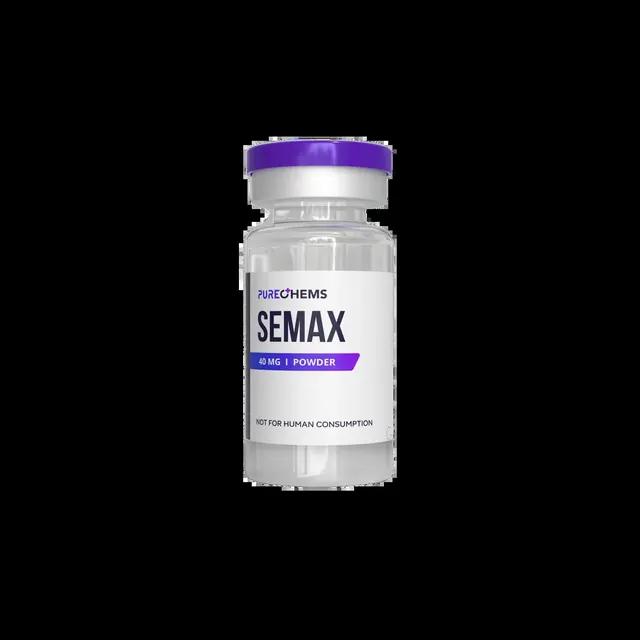
A research use only comparison of Semax and Selank, two heptapeptides studied in preclinical neuroscience: chemistry, mechanisms, handling and FAQs.
Read article