BPC-157: What the Preclinical Research Actually Shows
A research-audience overview of BPC-157: what the peptide is, what the preclinical literature covers, its unapproved regulatory status, and lab handling notes. Research use only.
Read article
Research Use Only: The information below summarises published scientific literature for laboratory and research audiences. It is not medical advice, and the compound discussed is not approved for human or veterinary use.
GHK-Cu is a copper-binding tripeptide made of the amino acids glycine, histidine and lysine (Gly-His-Lys) complexed with a copper(II) ion. The GHK sequence was first isolated from human plasma in 1973 by Loren Pickart, and it has been the subject of continuous research ever since. Plasma levels of GHK are highest in young adults and decline with age, which is one reason the peptide has attracted so much research interest.
Among research peptides, GHK-Cu is one of the most studied copper peptides, with a large body of literature covering gene expression, extracellular-matrix biology and cell-culture models.
The GHK-Cu evidence base is dominated by in vitro (cell) and in vivo (animal) studies, along with gene-expression analyses. A widely cited 2018 review reported that GHK-Cu can influence the expression of a large fraction of human genes in laboratory models.
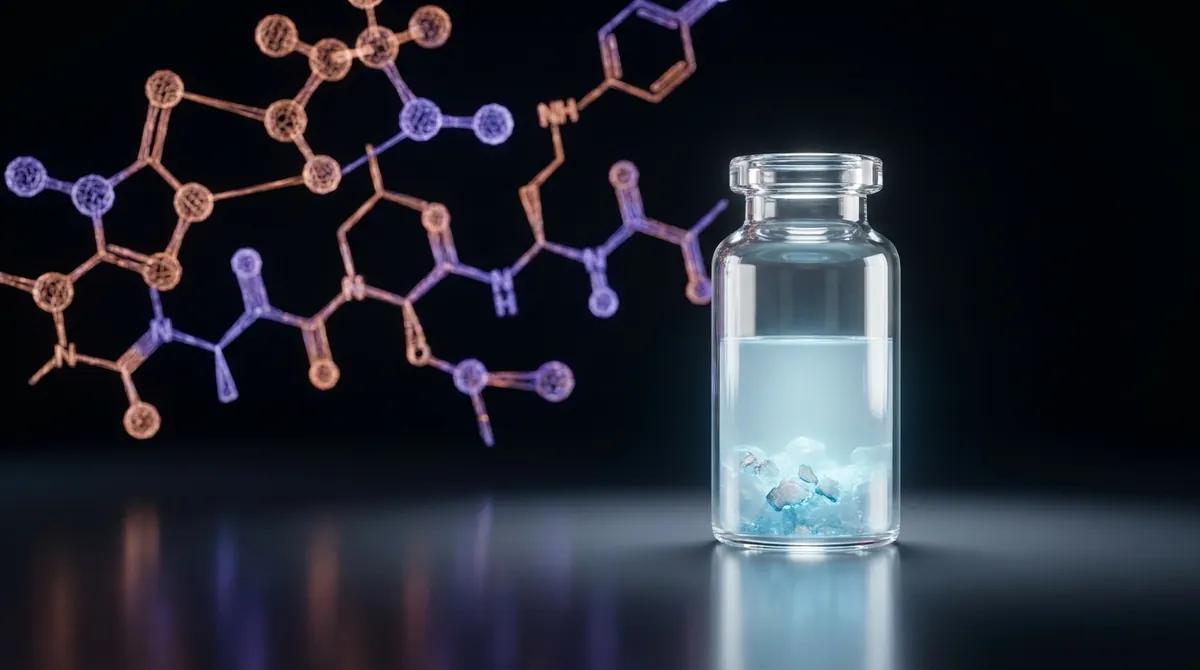
GHK-Cu is a small tripeptide (Gly-His-Lys) that chelates a copper(II) ion through its histidine and terminal amino groups, giving solutions a characteristic blue tint. It is typically supplied as a lyophilised powder for laboratory reconstitution. These are physicochemical properties relevant to handling and analysis, not indications of any human use.
GHK-Cu supplied as a research chemical has not been approved by the FDA, EMA or any comparable authority as a medicinal product, and cosmetic use of copper peptides is a separate regulatory category with its own rules. Research-grade material is intended strictly for laboratory and scientific work and is not for human or veterinary consumption.
In the research market, GHK-Cu is often studied alongside other peptides investigated for matrix and tissue-support pathways. Our GHK-Cu research peptide, our GLOW research blend (GHK-Cu, TB-500, BPC-157) and our GHK-Cu / Minoxidil research formulation are examples of products intended purely for laboratory research.
Copper peptides such as GHK-Cu are generally supplied lyophilised and kept cool, dry and protected from light, with reconstituted solution refrigerated and used within the stability window indicated for each batch. Copper complexes can be sensitive to pH and oxidation, so follow the documentation supplied with the product and your institution’s handling protocols.
GHK refers to the tripeptide glycine-histidine-lysine, and Cu is the chemical symbol for copper. GHK-Cu is the copper-bound form of the peptide.
Research-grade GHK-Cu is a laboratory chemical and is not approved as a medicinal product. It is not intended for human or veterinary use.
The literature is largely made up of cell-culture, animal and gene-expression studies. Findings from these models should not be extrapolated to people.
Keep lyophilised peptide cool, dry and away from light, and refrigerate reconstituted solution. Follow the stability guidance provided with each batch.
GHK-Cu is a naturally occurring copper tripeptide with a deep preclinical literature focused on extracellular-matrix and gene-expression pathways. It remains a research material: not approved as a medicine, and intended only for laboratory work. Researchers exploring copper-peptide formulations can review our GHK-Cu and GLOW blend research products.
Disclaimer: This article is for informational and educational purposes for a research audience. It is not medical advice. Products referenced are sold strictly for laboratory research and are not for human or veterinary use.
Research-grade GHK-Cu from PureChems: Buy GHK-Cu in Europe. Independently HPLC verified, Certificate of Analysis included, discreet tracked EU shipping. For laboratory research use only.
A research-audience overview of BPC-157: what the peptide is, what the preclinical literature covers, its unapproved regulatory status, and lab handling notes. Research use only.
Read article
MOTS-c vs SS-31 (elamipretide) compared: origin, chemistry, preclinical literature and lab handling. Research use only.
Read article
A research use only comparison of Noopept and Semax: chemistry, mechanisms studied in preclinical models, and laboratory handling notes.
Read article