Exercise Mimetics: PPAR, REV-ERB and ERR Research Compounds Overview
A research-use-only overview of exercise mimetics: PPAR-delta, REV-ERB and ERR research compounds studied in preclinical metabolic literature.
Read article
Research use only. The information below summarizes preclinical scientific literature for laboratory and educational reference. It is not for human or veterinary use, and nothing here describes or suggests any form of administration. Pure Chems supplies these materials strictly as research chemicals.
Semax and Selank are two of the most frequently compared synthetic heptapeptides in the research literature. Both originated from work at the Russian Academy of Sciences, both are seven-amino-acid peptides built on a naturally occurring parent molecule, and both are studied in neuroscience models. Yet they descend from completely different parent peptides and are examined for distinct biological questions. This overview looks at how the two compounds are described side by side in preclinical studies, focusing on chemistry, reported mechanisms, and laboratory handling.
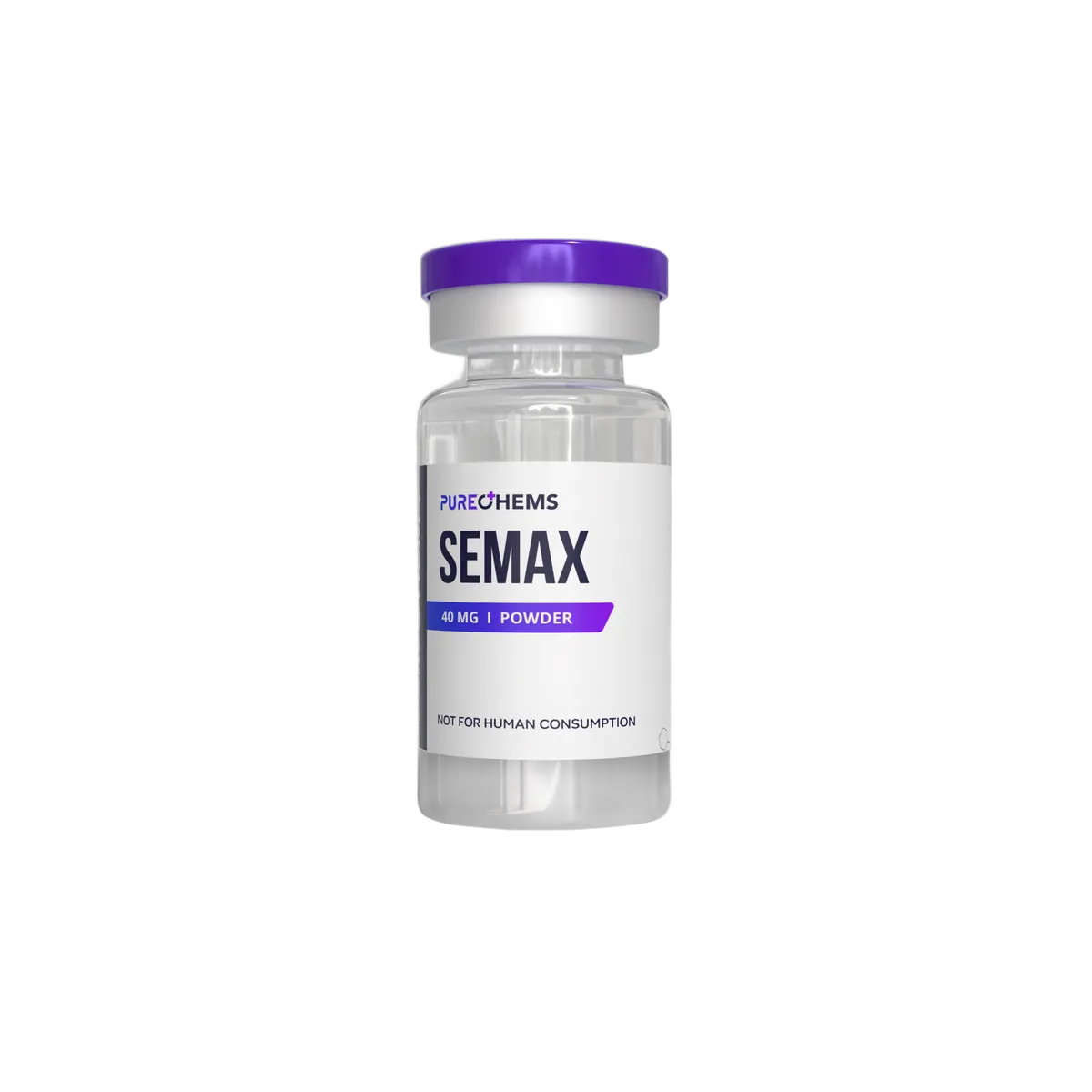
Semax is a synthetic heptapeptide analog of the adrenocorticotropic hormone fragment ACTH(4-10). Its sequence is Met-Glu-His-Phe-Pro-Gly-Pro. The Pro-Gly-Pro tail was added to the biologically active ACTH fragment to slow enzymatic breakdown, and in the literature Semax is grouped with the nootropic and neuroprotective research peptides.
Selank is a synthetic heptapeptide analog of the endogenous immunomodulatory peptide tuftsin (Thr-Lys-Pro-Arg). Its sequence is Thr-Lys-Pro-Arg-Pro-Gly-Pro, again with a Pro-Gly-Pro extension to increase stability. In the literature Selank is described mainly in the context of anxiolytic and immunoregulatory research rather than cognition.
So while the two peptides look like siblings on paper, their parent molecules place them in different research families: Semax sits alongside cognition and neuroprotection studies, and Selank sits alongside anxiety and immune-signaling studies.
Both peptides have been examined primarily in rodent models and in vitro systems. A recurring theme in the comparative literature is that each peptide has been linked to changes in brain-derived neurotrophic factor (BDNF), but they are studied for different downstream questions.
For researchers who are new to these two peptides, the most useful mental model is that they are structurally analogous but functionally divergent: same peptide-engineering strategy, different biological target space.
Neither Semax nor Selank is approved as a medicine in the European Union. Both were developed and are registered as pharmaceutical products only in Russia, and they hold no marketing authorization under the European Medicines Agency or in most other jurisdictions. In the EU they are handled as research chemicals under the REACH framework, not as medicinal products.
That distinction is the whole point of the research use only label. As soon as a research chemical is presented with a therapeutic claim or with any suggestion of human use, it can fall under EU medicines law (Directive 2001/83/EC). Describing only the published preclinical literature, in the third person, keeps the material correctly classified and keeps the discussion honest. Neither compound is currently listed on the World Anti-Doping Agency Prohibited List, but regulatory and sporting status can change, so researchers working in regulated environments should verify the current position independently.
Semax and Selank are handled almost identically in the laboratory because both are lyophilized peptides. General practice reported for research peptides of this type includes:
For a fuller walk-through of solvent choices, see the Pure Chems note on bacteriostatic water versus acetic acid for peptide reconstitution.
No. They are both synthetic heptapeptides that share a Pro-Gly-Pro stabilizing tail, but Semax is derived from the ACTH(4-10) fragment and is studied mainly in cognition and neuroprotection research, while Selank is derived from tuftsin and is studied mainly in anxiety and immune-signaling research.
The parent molecule. Semax carries the pharmacological research context of an ACTH fragment, and Selank carries the context of the immunomodulatory peptide tuftsin. This shapes which experimental models and pathways each peptide is examined in.
No. Neither peptide holds marketing authorization in the European Union. They are approved as pharmaceuticals only in Russia and are treated as research chemicals elsewhere. They are supplied strictly for laboratory research.
In the EU these peptides are generally handled as research chemicals under the REACH framework rather than as medicines, and are supplied for laboratory and analytical use only, not for human or veterinary use. Individual national rules can differ, so researchers should confirm the requirements that apply to their own institution and country.
The literature does not frame them as competitors. They are studied for different questions, so a comparison is about matching a peptide to a research model rather than ranking one above the other.
Explore the individual research overviews for each compound, including Semax: what the research shows and Selank: what the research shows, and see the wider nootropic and racetam research compounds overview for how these peptides fit the broader category. Research-grade Semax and Selank are available from Pure Chems for laboratory use.
References sourced via PubMed.
Disclaimer: This article is provided for research and educational purposes only. Semax and Selank are research chemicals intended strictly for in vitro and laboratory investigation. They are not for human or veterinary use, not dietary supplements, and not medicinal products. Nothing here is medical advice or a therapeutic claim.
A research-use-only overview of exercise mimetics: PPAR-delta, REV-ERB and ERR research compounds studied in preclinical metabolic literature.
Read article
A research use only overview of tissue repair and recovery peptides (BPC-157, TB-500, GHK-Cu and more) with preclinical context and lab handling notes.
Read article
A research use only overview of nootropic and racetam compounds: chemical families, reported preclinical mechanisms, and EU regulatory status.
Read article